Precision at Scale:
Domain-Specific Datasets On-Demand
Abstract
We present Precision at Scale (PaS), a modular, fully autonomous pipeline for the creation of domain-specific image datasets on-demand. Given only two text inputs — a domain name and a brief description — PaS generates a curated, scalable dataset through three key stages: LLM-guided concept discovery, building a rich concept bank covering the target domain; hybrid image collection, combining web retrieval from large-scale sources with text-to-image synthetic generation; and autonomous curation, applying similarity-based deduplication followed by iterative Pareto-front removal of out-of-domain images. The pipeline is fully modular, supporting any LLM, VLM, or image generation model. Evaluated on three domains — food, birds, and insects — PaS achieves state-of-the-art results in classification, semantic segmentation, and keypoint detection, outperforming supervised datasets and competing with web-scale collections at a fraction of their size.
Pipeline Overview
Input
Discovery
- Generate LLM L1
- Expand LLM L2
- Filter & validate LLM L3
Collection
- Web retrieval (Re-LAION-5B)
- Text-to-image synthesis
- Merge & deduplicate
Curation
- SSCD-based deduplication
- CLIP-based OOD scoring
- Pareto-front removal
Dataset
Domains
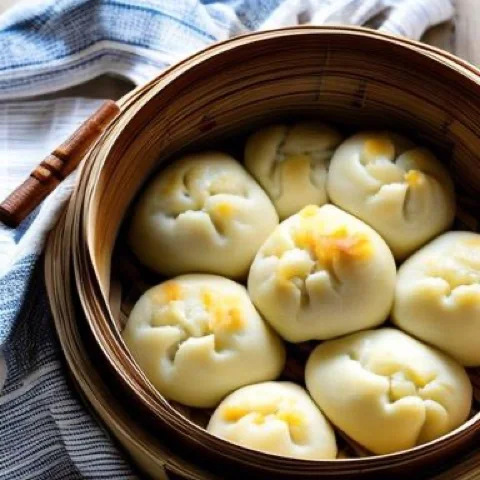
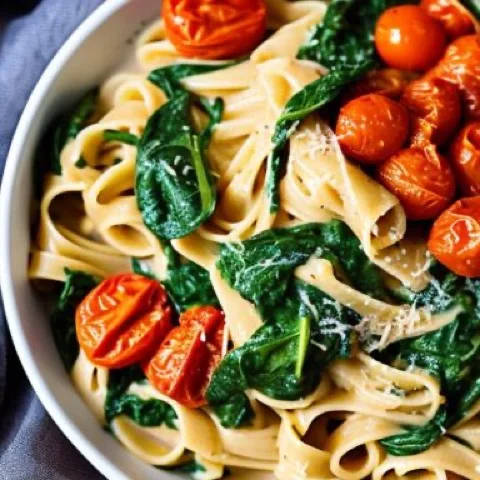
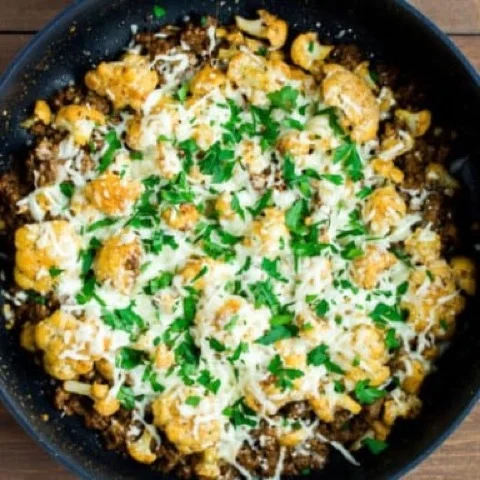
PaS-F targets the food domain. Evaluated on Food-101, FoodX-251, and Food-2K via k-NN and linear probing, and on FoodSeg103 for semantic segmentation.
ViT-B/16 pre-trained on PaS-F surpasses the same backbone trained on ImageNet-21K in segmentation mIoU, despite PaS-F being orders of magnitude smaller.



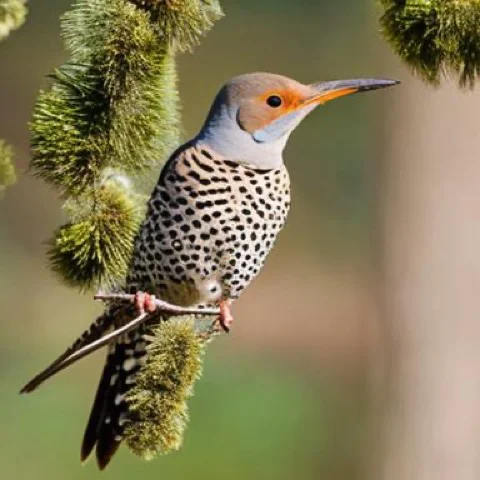
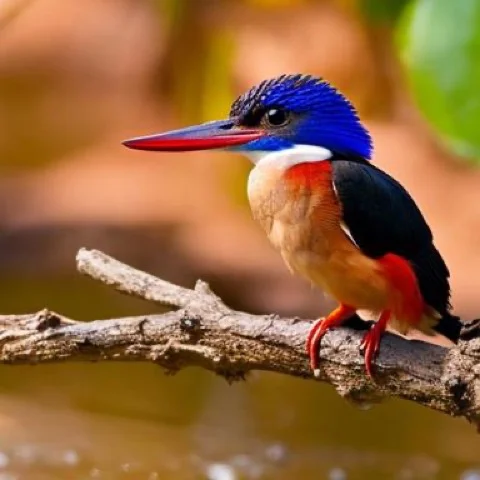
PaS-B targets the bird domain. Evaluated against CUB-200-2011 and Birdsnap on classification tasks and keypoint detection.
PaS-B covers a broader lexical and visual concept space than CUB-200-2011, whose supervised construction produces densely populated but semantically narrow clusters.

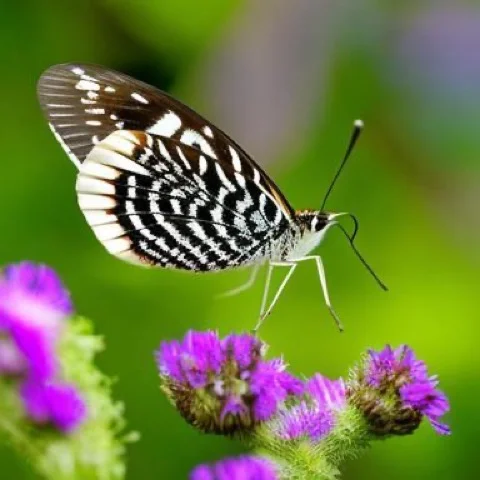
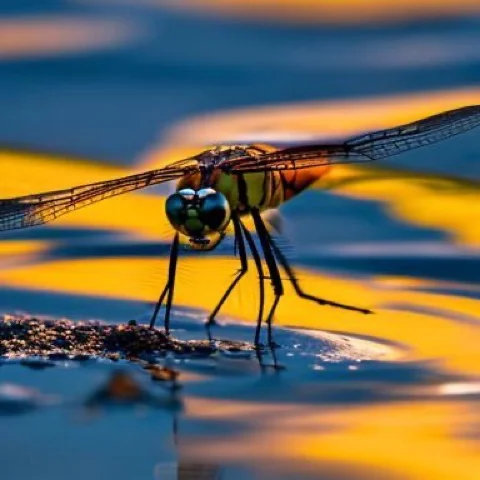
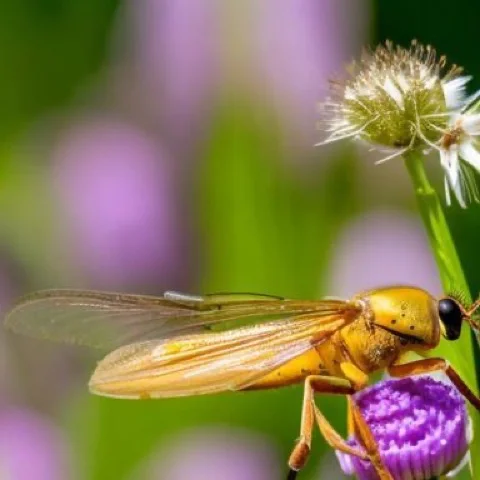
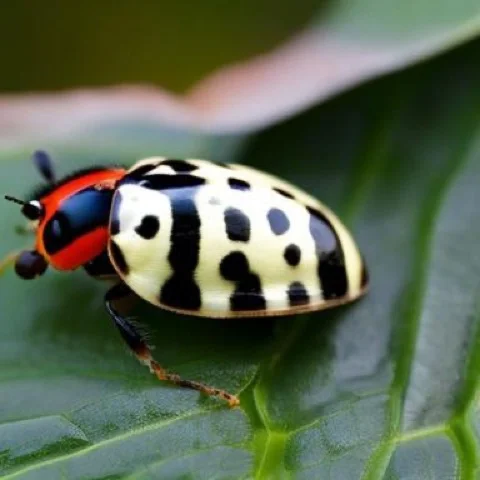
PaS-I targets the insect domain. Evaluated on the AMI GBIF dataset across regional subsets (Central America, North America, Europe) at family-level classification.
PaS-I achieves best results in most AMI regional subsets, outperforming IN-21K and WIT across the board and IN-1K in Central America and North America — a strong result in a fine-grained, low-resource domain.

Key Results
Performance Across Domains
Verified results from Tables 3–6 of the paper. Food & insects: k-NN accuracy. Birds: full fine-tuning accuracy (CUB-200-2011). Axis spans the actual value range per domain.
Results from the Paper
k-NN and full fine-tuning accuracy (%) on ViT-B/16. † Supervised pretraining (stronger baseline). Best value per benchmark in bold.
| Pretraining Data | Size | k-NN Accuracy (%) | Full Fine-tuning (%) | |||
|---|---|---|---|---|---|---|
| Food-101 | CUB-200 | AMI-Europe | Food-101 | CUB-200 | ||
| PaS-F | 1.2M | 77.3 | – | – | 89.1 | – |
| PaS-B | 1.2M | – | 46.4 | – | – | 82.9 |
| PaS-I | 1.9M | – | – | 39.5 | – | – |
| IN-1K | 1.2M | 56.4 | 40.8 | 39.9 | 87.1 | 78.5 |
| IN-21K† | 14M | 59.3 | 69.2 | 38.5 | 86.3 | 81.3 |
| WIT† | 400M | 81.9 | 63.0 | 26.6 | – | – |
| Food-2K | 0.6M | 65.4 | – | – | 87.9 | – |
| iNatBirds | 0.4M | – | 19.7 | – | – | 76.8 |
Citation
@article{rodriguezdevera2026pas,
  title     = {Precision at Scale: Domain-Specific Datasets On-Demand},
  author    = {Rodr{\'{\i}}guez-de-Vera, Jes{\'u}s M. and
               Estepa, Imanol G. and
               Saras{\'u}a, Ignacio and
               Nagarajan, Bhalaji and
               Radeva, Petia},
  journal   = {Pattern Recognition},
  volume    = {171},
  pages     = {112236},
  year      = {2026},
  publisher = {Elsevier},
  issn      = {0031-3203},
  doi       = {10.1016/j.patcog.2025.112236},
  url       = {https://doi.org/10.1016/j.patcog.2025.112236}
}
Acknowledgments
This work was partially funded by EU project MUSAE (01070421), 2021-SGR-01094 (AGAUR), Icrea Academia’2022, Robo STEAM (2022-1-BG01-KA220-VET000089434, Erasmus+ EU), DeepSense (ACE053/22/000029, ACCIÓ), DeepFoodVol (PDC2022-133642-I00) and IDEATE (PID2022-141566NB-I00), AEI-MICINN. J. M. Rodríguez-de-Vera and I. G. Estepa were supported by FPU grants FPU22/03116 and FPU23/02822 (Ministry of Universities, Spain); B. Nagarajan by the AI4S fellowship (Red.es, C005/24-ED CV1, NextGenerationEU/PRTR). Compute was provided by EuroHPC (EHPC-DEV-2023D12-059, Leonardo/CINECA) and RES (IM-2023-3-0019, MareNostrum5/BSC).